Prayer, like most spiritual practices, is subject to a spectrum of opinion and conviction as to how it is best practiced.
Prayer in a word, means different things to different people. Typically we associate prayer with some form of communication and personal encounter with God. The term prayer has been applied to everything from experiencing a silent awareness of His presence to a cacophonous expression of verbal petition.
There is tension therefore, particularly within Christian ranks, between the silent end of the spectrum in what might be termed communion, versus the verbal petition end of the spectrum which could be termed intercession. Jesus validated this wide spectrum of prayer Himself, by demonstrating a prayer life that embodied both communion with His Father in silence as well intercession with strong crying and tears for the needs of others.
Let me share a New Testament illustration of each. First we have the picture of Mary sitting at the feet of Jesus. Her simple enjoyment of His presence is a beautiful illustration of contemplative communion. She chose His presence over performance, unlike her sister Martha, and Jesus rewarded her by affirming that she had chosen the “better” part. (Luke 10:42) To all those like Mary who are naturally inclined to the communion side of the spectrum of prayer this is a very nurturing and encouraging story.
As for the intercession end of the spectrum we have a great illustration in the book of Acts when Peter and John returned after having been arrested for preaching the Gospel. In response to the threats of the chief priests and elders we are told they and all those gathered “raised their voices together” in intercession beseeching God to undertake on their behalf. The prayer was so powerful that “the place where they were meeting was shaken. And they were all filled with the Holy Spirit and spoke the word of God boldly.” (Acts 4:24, 31) To all those like myself, who find at the core of ones being a drawing to intercession and verbal petitioning, this story stirs faith to do the same.
Now is the form of prayer termed “communion” as illustrated by Mary a better form of prayer than “intercession” as illustrated by Peter, John and the disciples? After all Jesus did say to Mary that she had chosen the better part. But the comparison Jesus was drawing was not between to two ends of the prayer spectrum, communion versus intercession. It was a comparison between communion with Jesus in a place of rest and serving Jesus frantically from a place of unrest.
Is intercession then a better form of prayer than communion? After all it did trigger an earthquake and result in anointed boldness to preach the gospel. Can communion with God do that? Well, let us consider for a moment this Mary of Bethany, as she is known, who sat at Jesus feet. There is evidence from her life that she also experienced a tremor from that encounter. The quaking she felt however was in her soul and it filled her with a resultant boldness. Many traditions identify her as the one who interrupted a meal Jesus was attending to pour expensive anointing oil upon Him. Some even have her as a Mary who stood unashamedly at the foot of the cross and as one of the myrrh bearing women who came to the tomb when everyone else was afraid. Now that’s boldness!
Here’s the bottom line. I do not believe one form of prayer is inherently better than another. Both are necessary and both accomplish God’s good purposes in and through us. We are going to be doing both in heaven.
The world needs communing contemplatives and interceding intercessors and every other expression that populates the spectrum in between! Each of us must find and move in our unique way of communicating with and encountering God. And we must find ways in which to encourage and complement one another in our respective giftings and callings.
Where does your natural prayer style fall in the spectrum?
Click Here for an email subscription to this blog.
Continue to remember those in prison as if you were together with them in prison, and those who are mistreated as if you yourselves were suffering. Hebrews 13:3 (NIV)
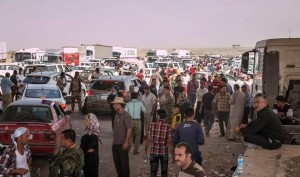
Imagine being given a 48 hour ultimatum, because you were a Christian, to either leave your city with only the clothes on your back or face a tortured death? That is exactly what happened last week in Iraq. The Islamist terrorist group known as ISIS which captured Mosul last month, a city of nearly 2 million people, issued an ultimatum to all Christians living there that they had two days to either convert to Islam, flee or face death by the sword.
Not unlike the threat to the Jews in Esther’s day, an extermination plan was put into place that could not be changed or altered. Saturday at noon was the deadline and reports from Christian refugees fleeing the region convey the horrors of persecution. Patriarch Louis Sako of the Chaldean Catholic Church in Baghdad said “For the first time in the history of Iraq, Mosul is now empty of Christians.”
The city of Mosul which once had upwards to 50,000 Christians is now seeing its churches and every vestige of Christian symbolism systematically destroyed. Last week ISIS began going throughout the community and scrawling the word “property of ISIS” on every Christian home. Christians fleeing Mosul did so with only the clothes on their backs as they were forced to leave everything behind including their money, gold, and jewelry.
Where will all these precious saints find refuge? Most are fleeing north into cities such as Irbil and Kurdish territory not held by the rebels where according to the UN more than 2 million refugees now reside.
Intercession is birthed through identification and putting ourselves in the shoes of others. Scripture encourages us to remember “those who are mistreated as if you yourselves were suffering.” This verse in Hebrews is one of the best motivations there is to pray for those who are suffering. I don’t know about you, but it’s overwhelming to imagine being forced at the threat of death to leave everything I have invested my entire life in, my home, neighborhood, community, church and work, not knowing if I will ever return. It is hard to imagine trying to shepherd my family and loved ones safely through a war zone, with no resources and no idea what the future will hold. That would drive anyone to prayer, crying out to God for mercy, grace and wisdom!
Knowing the present plight of the Iraqi Christians should draw our hearts of compassion to prayer as well. Will you consider giving some time to praying for these brothers and sisters in Christ who are suffering in that part of the world? It may seem like such a distant need and so overwhelming as to even know where to begin, but there are no limitations in God and every prayer does make a difference. For ideas as to how to pray for those who are being persecuted for their faith, are victims of war and are refugees – click here!
Click Here for an email subscription to this blog.

“Come now, and let us reason together,” Says the LORD. Isaiah 1:18b (NASB)
Appealing to God to answer prayer can be likened to the ways in which children learn to convince their parents to act on their behalf. There are certain approaches that are more effective than others. In fact, the basis from which appeals are made can make a huge difference in how a request is answered.
When my firstborn son was three he loved going to the park near our home where there was a playground. Like many parents, I was sometimes too preoccupied to give him the attention he desired and occasionally found myself procrastinating in doing the things I had promised him. One day my little guy came up to me holding in his left hand a small bible we had given him. With his right hand he was pointing to it emphatically and looking me directly in the eyes he pleaded “Go park!”
Since my conversion to Christianity the year of his birth I have always unashamedly made the Bible my handbook for life. My son knew that from seeing me studying it daily, searching its pages for guidance, using it for family devotions, and teaching from it as a pastor. Needless to say his words and actions immediately melted my heart and without hesitation I put aside what I was doing in order to take him to the playground. Kid’s know how to touch their parents (and grandparents) hearts don’t they?
How much more can we as children of our Heavenly Father know how to touch His heart? The truth is there are proven ways to convince God to answer our prayers! I use the word “convince” here advisedly, understanding that prayer is not so much a process of convincing God as it is discovering His will and His ways in order to use that as the basis for our request.
A study of the great prayers of the Bible reveals that each of them drew upon foundational truths about God and His expectations of those who approach Him. The intercessors such as Abraham, Moses, Daniel, Esther, Nehemiah, Paul and Jesus all presented their requests to God with what may be termed reasoned arguments. A closer examination reveals that their “reasoning” was based upon one or more of seven foundational Biblical principles.
These principles form the basis from which all effective intercession must be made. If you or I intend to get answers to our prayers by “convincing” God to grant us our requests, we must present our case within the purview of these principles.
Here then is the biblical basis for effective intercession. God answers prayer based upon an appeal to . . .
1. God’s Character – who He is and His ways. Abraham appeals to God as the righteous judge in bargaining back and forth with God over the plight of Sodom. (Genesis 18:25-26) Nehemiah pleads with God for Israelites based on His covenant keeping and loving nature. (Nehemiah 1:5) Appealing to the very nature and character of God is one of the most powerful prayers we can offer because He will not and cannot deny Himself.
2. God’s Past Mercy and Dealings – His acts. God’s merciful intervention in the past reveals His kind intention and purpose for the future. Moses sought the favor of God on behalf of Israel by reminding God of how He brought them out of Egypt “with great power and a mighty hand.” Moses did so in appealing to Him to use that same power to complete what He had started, in this case, by bringing them into the promised land. (Exodus 32:11) Nehemiah presents a similar case before God with regard to the restoration of Jerusalem. (Nehemiah 1:10) Each intercessor here is simply asking God to continue to act consistently in the future, based on His past merciful dealings.
3. God’s Reputation and Honor – concern for the Glory of God. The glory of God is a frequent and preeminent theme in most Biblical prayers. Moses appeals to God to uphold His reputation and glory as does Daniel and David (Exodus 32:12, Daniel 9:15-19, Psalms 57:5, 11), Paul says it best: “For from Him and through Him and for Him are all things. To Him be the glory forever! Amen.” (Romans 11:36 NIV)
4. God’s Promises – that He would fulfill what He has promised. Since God is not a man that He should lie and all the promises of God find their “Yes” in Christ, there is no stronger appeal to God than prayers based upon His many Scriptural promises. (Numbers 23:19, 2 Corinthians 1:20) Whenever we pray “God you said . . . .” there is a confidence and authority in the Spirit that releases the power of God to accomplish what we ask. Faith literally comes into and energizes our prayers when we confess God’s Word. (Romans 10:17)
5. Our Identification with Those for Whom we are Praying. God’s identification with His creation in sending His son Jesus to die for our redemption is the gold standard of intercessory identification. The heart of God is moved to action by all those who identify so fully with those for whom they pray that they themselves are willing to enter into their suffering. Both Moses and Paul in their intercession for Israel confessed their own willingness to suffer personal rejection by God if it meant in turn the salvation of the Jews. (Exodus 32:32, Romans 9:3) The old adage about walking a mile in another’s shoes is empowering advice when it comes to interceding effectively for others.
6. Our Prayer Offered in Humility – There are many references in the Bible to God’s ready response with those who approach Him with humility. In fact He tells us that He dwells “with those whose spirits are contrite and humble.” (Isaiah 57:15 NLT) And that is why He promises to give grace to the humble and save those who are contrite in spirit. (Psalm 34:18, James 4:6) Is it any wonder therefore that when Abraham persists in reasoning with God on behalf of Sodom we see him acknowledging that “Since I have begun, let me speak further to my Lord, even though I am but dust and ashes.” (Genesis 18:27)
7. Our Persistent Faith – The writer to the Hebrews tells us that it is through faith and patience that we inherit God’s promises and without faith it is impossible to please God. (Hebrews 6:12, 11:6) Jesus in His teaching on prayer frequently emphasized persistent faith with such parables as those illustrating the shameless audacity of the friend at midnight or the incessant persistence of the widow with the unjust judge. (Luke 5:1-13 & 18:1-6) Abraham’s approach to God in prayer is a great example of this principle. He demonstrated a remarkable persistence in negotiating downward from the presence of 50 to 10 righteous people as reason for God to spare His judgment upon Sodom. (Genesis 18:24-33)
When God says “Come now, and let us reason together,” it is like He is inviting us into the courtroom of heaven to present before Him a reasoned and convincing case as to why He should grant our request. The context of this verse is an invitation given by God to the prophet Isaiah to “reason” with Him in prayer in order to thwart the impending judgments coming upon Judah and Jerusalem.
As in any court room, there are proper ways in which to approach the bench and make requests. First it must be duly noted that only those who come in Jesus name, professing Jesus as their advocate will be welcomed. These seven principles are tried and true ways in which the judge of all the earth has chosen to respond and act on behalf of those who come to Him. Basing our prayers on one or more of them provides us confidence in being heard and an assurance that an answer is forth coming. (1 John 5:15)
Has your experience in intercession been consistent with these principles? Please share you observations.
Click Here for an email subscription to this blog.
![Praying-on-Knees-300x162[1]](../wp-content/uploads/2014/07/Praying-on-Knees-300x1621.gif)
Most Christians would agree that demonstrating a self-sacrificial love for others is the essence of the gospel message and the highest form of obedience we can render to the New Commandment of Jesus. Our common concept of expressing Christ’s love is typically associated with our feet (going), our hands (serving) and our mouths (proclaiming). But how often do we associate His love expressed from our knees through praying?
We think of love, and rightly so, as an action or deed done specifically for the benefit of another. Jesus, our example, expressed His love throughout His earthly ministry for those He came to save. He went from village to village with His feet, He healed all who came to Him with His hands, He proclaimed the Gospel with His mouth and yes, right up to His arrest in the Garden He agonized in prayer upon His knees.
His love, referred to in the Greek as agape, is a sacrificial kind of love. It is a love that found its purest expression in Jesus laying down His life for the salvation of human kind. Our expressions of His love for others therefore will always extract a personal cost from us as well. Like all forms of agape love, the price of loving others from our knees in prayer demands a sacrifice of our time, our effort, our comfort, and personal preferences.
Such prayer, motivated by love, is what the Bible calls intercession. It can be said that intercession is agape love on its knees. It is a form of earnest prayer that is focused upon and offered on behalf of others. It is motivated by a selfless identification with the cares and concerns of others. An intercessor places him or herself in the shoes of another and stands in the gap between them and God pleading for mercy. An intercessor also takes a position as a hedge of protection guarding those for whom they are interceding from the attack of the enemy. (Ezekiel 22:29-30)
Throughout the Bible, the ground of authority from which intercession is made is rooted in one or more of three divine truths. It is based upon an appeal to the unchanging nature and character of God, His past merciful dealings with His creation, and/or the many promises of His coming kingdom and glory. Because the very idea of intercession originated in the heart of God, it is not something we can do in our own strength. On the contrary it requires a humble dependence upon Him, a stirring by His Spirit of our heart of compassion and a persistent faith to overcome every distraction and obstacle that would thwart our efforts.
Intercession is arguably the first and best thing we can do for someone. Consider this. Intercession is presently the primary ministry of Jesus as He is seated in heavenly places at the right hand of the Father. The Bible clearly states that since His resurrection and ascension He “always lives to make intercession.” (Hebrews 11:25) And here is the clincher, Paul the apostle tells us that we are seated with Him in the Spirit in that place of influence and authority and urged also like Christ, to “pray continually.” (Ephesians 2:6, 1 Thessalonians 5:17)
Sadly, the ministry of intercession is often misunderstood and regarded as something only a select few are called and equipped to do. As a result it is relegated in people’s thinking to the super spiritual, the prophetic types, the mission-minded, more women than men, or the shut-ins and the elderly who have nothing better to do. This is an all too persistent misbelief! Recently I was shocked to hear even a pastor excuse his own prayerlessness with the expressed assumption that intercession was something for the retirees to do because they had more time on their hands.
If however, intercession is as we have established, a practical expression of Jesus’ love for others, it is something everyone is expected to do, busy pastors included! It becomes the responsibility of every believer, irregardless of calling, gifting, gender or age. Everyone is “called” and “gifted” to love, none exempted. And what better way to love someone than from our knees in intercession?
How have your concepts or misconceptions about intercession affected you? What have you learned about intercession that has made a positive difference in your prayer life?
Click Here for an email subscription to this blog.
“Look at the nations and watch- and be utterly amazed. For I am going to do something in your days that you would not believe, even if you were told.” Habakkuk 1:5 NIV
“Look at the nations and watch!” This is as timely an exhortation today as it was over 2500 years ago when it was first given! Keeping a watchful eye on what is happening in the nations is critical because Jesus commanded us that as His people we engage in being a house of prayer for all nations. Watching the nations provides us with understanding into the unfolding of God’s purposes in the earth. And, it arms us with strategic insights into ways in which we can intercede for His kingdom to come and His will to be done on earth as it is in heaven.
The manner in which the nations relate to God and His people, both Israel and the church, has always been associated with the blessings or judgments that He metes out. The three chapter book of Habakkuk provides an excellent illustration of how God invites us through intercession, into His history shaping intervention in the nations.
Habakkuk was a prophet in the years preceding the fall of Jerusalem in 586 BC and the resultant Jewish exile. It was at a time when God was raising up the Babylonians to bring judgment upon Judea and the surrounding nations for their lawlessness and injustice. (Habakkuk 1:6-17) What Habakkuk saw happening in the nations caused him to take a stand before God as a watchman intercessor. (2:1) In so doing he was seeking to understand what God was doing and to intercede on behalf of God’s people and purposes in the earth. “Lord,” he prayed, “I have heard of your fame; I stand in awe of your deeds, Lord. Repeat them, in our time make them known; in wrath remember mercy.” (3:2)
This is a common pattern throughout the Bible, particularly in the lives of the prophets, when God took initiative to reveal to His servants what He was doing among the nations and called them to intercession. (Isaiah 59:16, Ezekiel 22:30) Not surprisingly, God’s strategic dealings with the nations continue to this day! And this call to “look at the nations and watch – and be utterly amazed” is even more relevant for us today “upon whom the end of the ages has come.” (1 Corinthians 10:11)
There are seven billion people on the planet, making up over 16,000 distinct people groups who speak roughly 6500 languages and inhabit 196 politically defined nations. They are all people whom God loves and for whom He sent His son Jesus to die for and redeem.
What happens in those nations governmentally, religiously, educationally, economically, militarily, in the arts, entertainment and media all affect the advancement or restriction of the gospel and ultimately their salvation. How they relate to other nations, the church, Israel, and most importantly to God, all determine their place in God’s end time destiny. It is He who controls the course of world events and it is He who will have the last word. “He changes times and seasons; he deposes kings and raises up others. He gives wisdom to the wise and knowledge to the discerning.” (Daniel 2:21 NIV)
Given these facts what then should we watch for as we look at the nations? Here are five things in the form of questions that we should ask about the nations that will help us intercede.
1. How do they relate to the church of Jesus Christ? Is there freedom to worship and preach the gospel? Or are believers restricted in their activities and even persecuted for their faith? Is the church merely surviving or is it thriving?
2. How do they relate to Israel? There are clear promises in Scripture that those who bless Israel will themselves be blessed and those who curse it will be cursed. (Genesis 12:3) What nations are friendly to Israel and what nations oppose her?
3. How do they relate to those who are victims of injustice? How do their domestic and foreign policies affect the poor, the weak and vulnerable, minorities, those suffering, the refugee, the widow and orphan?
4. Where does it appear anti-Christ principalities and powers are forming battle lines in the spiritual realm? Where are there shifts in power? Which nations are extending their influence and dominion? What nations are losing their influence and control – to whom? How and with whom are nations aligned economically politically and/or militarily?
5. Where is God at work in and through all these things? Can you see what God is doing to extend His kingdom and righteousness of which He has promised an increase without end?
I have personally found these observations very helpful in praying for God’s purposes to unfold in the nations. God has a way of combining our natural understanding with spiritual revelation that leads to anointed, energized times of intercession. (1 Corinthians 14:15) Being “utterly amazed” at what God is doing is often the result.
How has God led you in answering Jesus’ call to be a house of prayer for all nations? Please share any insights or experiences you have had.
Click Here for an email subscription to this blog.





 Twitter